
Chris Tarrant: The Remarkable Career from Tiswas to Millionaire
How a regional television reporter became a defining voice of British radio and the original host of one of television’s biggest quiz shows.

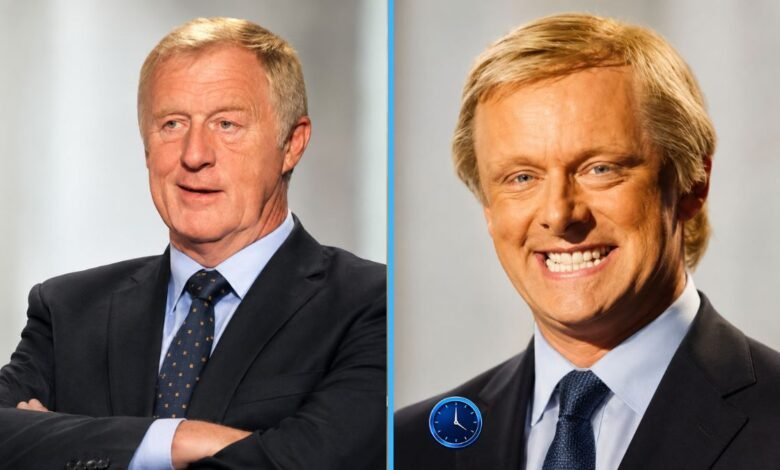
Chris Tarrant is a retired English television and radio broadcaster known for moving through several distinct eras of British entertainment. He first gained widespread recognition through the anarchic Saturday-morning programme Tiswas, later became a major voice on London’s Capital Radio and eventually hosted the original UK version of Who Wants to Be a Millionaire? from 1998 until 2014.
People continue to search for Chris Tarrant because his work is tied to several memorable formats in British broadcasting. Older audiences remember the organised chaos of Tiswas and his long-running Capital breakfast show, while international viewers associate him with the dramatic pauses, high-stakes questions and familiar phrases that helped make Who Wants to Be a Millionaire? a global television success. After more than five decades in broadcasting, Tarrant confirmed his retirement from regular television work in late 2024.
Quick Bio
| Field | Confirmed Information |
|---|
| Full Name | Christopher John Tarrant |
| Date of Birth | 10 October 1946 |
| Birthplace | Reading, Berkshire, England |
| Nationality | English |
| Profession | Retired television presenter and radio broadcaster |
| Education | English degree from the University of Birmingham |
| Known For | Tiswas, Capital Radio and Who Wants to Be a Millionaire? |
| Broadcasting Career | More than five decades in television and radio |
| Children | Four, including Radio X presenter Toby Tarrant |
| Honour | OBE for services to broadcasting and charity |
| Current Status | Retired from regular television work |
Who Is Chris Tarrant?
Christopher John Tarrant was born in Reading on 10 October 1946. After studying English at the University of Birmingham, he briefly worked in teaching and other jobs before entering regional television. He started at ATV in Birmingham, working on news and light-hearted regional reports.
These assignments introduced qualities that would later define his presenting career. Tarrant was comfortable reacting to unpredictable people, finding humour in unusual situations and addressing the audience in a conversational rather than formal style. He reported on unconventional Midlands stories during the early 1970s before being selected for the programme that established his national reputation.
From Regional Television to Tiswas
Tarrant’s decisive television breakthrough came with Tiswas, which he presented from 1974 until 1981. The programme began as an ATV regional production before spreading across the ITV network. Its mixture of music, sketches, slapstick, audience participation and deliberate disorder distinguished it from more conventional children’s television.
Tarrant was not simply reading scripted introductions. He became one of the central figures responsible for maintaining the programme’s pace and making its unpredictable format work. Foam pies, water, comedy characters, noisy audiences and unscripted exchanges were treated as part of the show rather than interruptions to it.
The programme helped establish Tarrant’s broadcasting personality: energetic, irreverent and willing to let events move beyond strict television conventions. He also contributed as a producer on some series, gaining experience in shaping entertainment rather than working only as its on-screen presenter. In a later Royal Television Society conversation, he described Tiswas as the programme that changed his life.
A late-night adult spin-off called O.T.T. followed in 1982 but lasted only one series. Although it did not reproduce the success of Tiswas, it showed that Tarrant’s appeal depended on more than a single children’s programme. His next major phase would take place behind a radio microphone.
Building a Major Radio Career
Tarrant joined Capital Radio in 1984 and remained with the London station for approximately two decades. He moved into the breakfast slot in 1987 and became one of the defining commercial-radio presenters of the period.
Breakfast radio required a different discipline from Tiswas. The programme had to combine conversation, music, competitions, humour, news and listener involvement while maintaining momentum through an early-morning schedule. Tarrant’s style translated naturally to the format because he could create the impression of an informal conversation while still maintaining tight timing in a broadcast.
The Capital years also became important to his later television career. Producer David Briggs worked on games and quizzes for the radio programme, including concepts that helped lead towards the creation of Who Wants to Be a Millionaire? Tarrant’s experience with radio competitions gave him an understanding of how uncertainty, risk and audience participation could turn a straightforward question into entertainment.
He left Capital in 2004 after a run that had made him a familiar morning voice to London listeners. His departure marked the end of one long broadcasting chapter, but by then his biggest television format was already an international phenomenon.
Who Wants to Be a Millionaire?
Who Wants to Be a Millionaire? launched on ITV in September 1998. Tarrant initially had doubts about taking on another programme because he was already balancing Capital Radio with television commitments, including the clip-based series Tarrant on TV. After presenting a pilot, however, he recognised the format’s potential.
The programme transformed a multiple-choice quiz into suspenseful prime-time television. Contestants faced increasingly valuable questions, limited lifelines and the possibility of losing a large proportion of their winnings after one incorrect answer. Tarrant’s role was crucial because the format depended on timing. He extended pauses, controlled his facial expression, and delayed confirming answers without making the process feel entirely artificial.
He also became closely associated with phrases such as “Is that your final answer?” and “But we don’t want to give you that.” The latter was identified by Tarrant as one of his own contributions to the programme’s presentation. He understood that the host should not compete with the contestant; his job was to intensify the decision and make viewers feel the weight of the money involved.
The programme attracted audiences exceeding 19 million during its early period and was sold internationally. Tarrant ultimately presented almost 600 episodes before leaving the original ITV run in 2014. His final programme, Chris’ Final Answer, looked back over his 15 years in the chair.
Why His Presenting Style Worked
Tarrant’s contribution was not based on subject expertise or a traditional quizmaster persona. His strength was managing emotion. He could joke with contestants during lower-value questions, then gradually remove that informality as the potential prize increased.
He also avoided revealing whether an answer was correct through obvious gestures. Tarrant later explained that his screen did not display the answer and that he deliberately trained himself not to react when he happened to know it. Commercial breaks were frequently placed at the point of maximum uncertainty, sometimes after a contestant had given an answer but before the result was announced.
That ability to change the atmosphere without altering the programme’s basic structure helped make the format repeatable. The questions changed, but the emotional journey remained understandable to viewers: confidence, doubt, risk and either relief or disappointment.
Other Television Work
Although Millionaire became his defining international credit, Tarrant’s television work covered a broader range of formats. He presented Tarrant on TV, which featured unusual, comic and sometimes surprising clips from programmes around the world. He also appeared in entertainment formats including Man O Man, The Colour of Money and Tarrant Lets the Kids Loose.
Later in his career, he moved towards factual and travel programming. Chris Tarrant: Extreme Railways followed demanding railway routes in different parts of the world, combining travel history with encounters involving local passengers, workers and communities. The programme allowed him to retain his informal style while working outside a studio environment.
His curiosity about travel, fishing and unusual places provided a natural direction as he reduced his involvement in large entertainment productions. The Royal Television Society described fishing and travel programmes as part of the closing stage of his television career.
Family and Personal Life
Chris Tarrant has spoken publicly about his family, although a responsible profile does not need to revisit the extensive tabloid reporting that surrounded the end of his marriages. He has been divorced twice and has four biological children. He also helped raise two stepchildren during his second marriage.
One of his children, Toby Tarrant, followed him into broadcasting and became a presenter on Radio X. Chris has discussed the comfort and importance of his children in established interviews, while Toby’s professional connection has occasionally brought the two generations together on air.
Tarrant’s family life has received considerable newspaper coverage, but its most relevant broadcasting connection is his son Toby Tarrant, who established his own career as a Radio X presenter.
Health and Charity Work
Tarrant suffered a stroke while travelling by air in 2014. He later discussed his recovery publicly and supported greater awareness of brain injuries, including through appearances connected with the charity Headway.
He received an OBE in 2004 for services to broadcasting and charity. His charitable involvement has included work supporting disadvantaged children and other community causes. The honour recognised that his public contribution extended beyond entertainment programmes.
Chris Tarrant’s Net Worth
No exact figure for Chris Tarrant’s net worth has been established by a reliable public financial source. Numerous entertainment websites publish estimates, but these figures generally lack transparent evidence and should not be presented as confirmed.
His documented income-producing work has included long-term radio employment, television presenting, books, commercial appearances and speaking engagements. However, those activities do not provide sufficient information to accurately calculate his assets, contracts, liabilities, or present financial position.
Retirement and Latest Confirmed Update
In December 2024, Tarrant said that he had retired from regular television work after approximately five decades. He explained that the pandemic had prompted him to reassess his priorities and that he preferred to have time for travel and family rather than return to demanding production schedules. The Royal Television Society subsequently reported his retirement while publishing a detailed retrospective of his career in April 2025.
Retirement has not prevented occasional public or broadcasting appearances. In June 2025, he contributed to a major retrospective about the making of Who Wants to Be a Millionaire?, explaining how the programme’s tension, commercial breaks and presentation style were developed. Radio X also promoted a 2026 Father’s Day appearance involving Chris and Toby Tarrant, suggesting that he remains open to selective guest appearances rather than resuming a regular broadcasting schedule.
Why People Search for Chris Tarrant
Interest in Chris Tarrant comes from several generations of viewers. Those who grew up during the 1970s often search for his connection to Tiswas, while radio audiences remember his years on Capital. International searches are more likely to centre on Who Wants to Be a Millionaire?, its catchphrases and his involvement in the Charles Ingram controversy.
More recent searches concern whether Tarrant is still presenting, why he left Millionaire, his retirement and his relationship with his broadcaster son Toby. His unusual ability to remain prominent across children’s television, radio, quiz shows and factual travel programmes explains why his career continues to attract retrospective interest.
Final Thoughts on Chris Tarrant
Chris Tarrant’s public story is fundamentally a broadcasting story. He progressed from regional reporting to the chaos of Tiswas, established a long-running radio career and became the original UK host of one of television’s most internationally successful quiz formats.
His lasting contribution to Who Wants to Be a Millionaire? was not simply asking questions. He helped create the pacing, suspense and presenter behaviour that audiences came to expect from the format. Although he has retired from regular television production, occasional interviews and guest appearances continue to connect him with the programmes that defined his five-decade career.
More Celebrity Profiles: Sheila Tarrant: The Remarkable Story Behind Chris Tarrant’s First Marriage
FAQs
Who is Chris Tarrant?
Chris Tarrant is a retired English television and radio broadcaster known for presenting Tiswas, Capital Radio’s breakfast programme and the original UK version of Who Wants to Be a Millionaire?
What is Chris Tarrant best known for?
Chris Tarrant is best known internationally for hosting Who Wants to Be a Millionaire? between 1998 and 2014. In Britain, he is also strongly associated with Tiswas and Capital Radio.
How old is Chris Tarrant?
Chris Tarrant was born on 10 October 1946. He is 79 years old as of July 2026.
Why did Chris Tarrant leave Who Wants to Be a Millionaire?
He announced his decision to leave after approximately 15 years as presenter. The original ITV run ended in 2014 before the format returned with Jeremy Clarkson in 2018.
Does Chris Tarrant have children?
Yes. He has four biological children and also helped raise two stepchildren. His son Toby Tarrant works as a radio broadcaster.
Has Chris Tarrant retired?
Yes. He confirmed his retirement from regular television work in December 2024, although he has continued making occasional interview and guest appearances.