
Lucipara Islands: A Guide to Indonesia’s Remote Banda Sea Reefs
Where remote coral reefs, remarkable sea-turtle populations and Indonesia’s evolving marine-conservation plans meet in the central Banda Sea.

Introduction
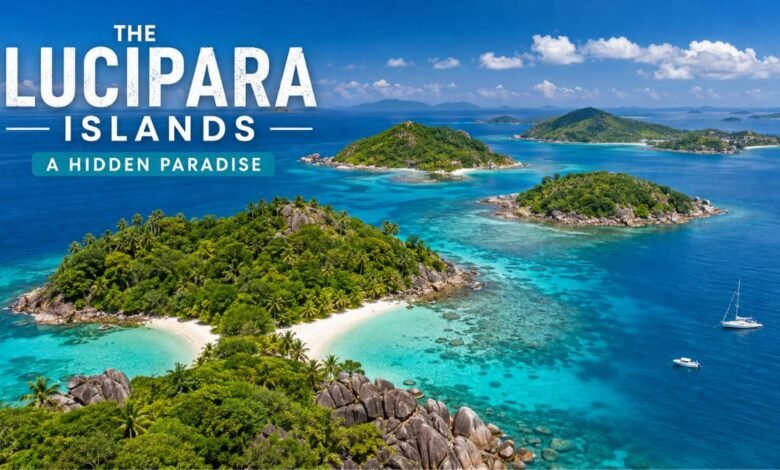
The Lucipara Islands are a remote group of small coral islands and reefs in Indonesia’s central Banda Sea, roughly 210 kilometres south of Ambon. Rather than a conventional tropical holiday destination with hotels, roads and scheduled sightseeing, Lucipara is defined by open ocean, steep reef walls, sea turtles, large reef fish and difficult access. Scientific surveys describe the group as uninhabited and unusually isolated, while conservation organisations have identified it as an important area for future marine protection.
That remoteness is exactly what makes Lucipara interesting — and why descriptions of it as simply an “untouched paradise” can be misleading. Its reefs have shown exceptional fish biomass and relatively limited human pressure. Still, researchers and conservation groups have also documented fishing pressure, marine debris and reef conditions ranging from damaged to very good. In 2026, Lucipara became part of an increasingly active conservation and marine-tourism programme in Maluku.
Quick Answer
The Lucipara Islands are a remote Indonesian island and reef group in the Banda Sea, within Maluku Province. They are best known for coral reefs, large numbers of sea turtles and expedition-style diving, but access is difficult and usually involves a specialist boat or liveaboard rather than ordinary tourist transport.
Where Are the Lucipara Islands?
Lucipara lies in the central Banda Sea, east of Indonesia. A 2023 peer-reviewed marine study places the surveyed island group at approximately 5°25′ south, 127°38′ east. It describes it as more than ten hours by sea and around 210 kilometres from Ambon, the nearest large population centre. The Coral Triangle Center separately describes the islands as about 110 nautical miles from Ambon.
The naming can be confusing because different sources group the islands slightly differently. The Coral Triangle Center describes seven islands across two clusters: the Penyu group, containing Bingkudu, Kadola and Mai, and the Maisel group, containing Maisel, Selatan, Karaungka and Laponda. Academic researchers likewise describe the wider Lucipara group as seven small coral-cay islands and distinguish between Lucipara and Penyu survey sites.
This broader definition is more useful than treating Lucipara as a single beach destination. Much of what makes the area significant lies underwater and between the islands: reef walls, channels, deep-ocean features and habitats used by large marine species.
Why Are the Lucipara Islands Special?
A Remote Coral-Reef System
The strongest evidence for Lucipara’s importance comes from marine research, not tourism marketing. Scientists conducting visual reef surveys in 2019 recorded 205 non-cryptic fish species across four study sites. They found medium-to-high coral cover and particularly high fish biomass, including substantial numbers of large predatory fish.
The study concluded that Lucipara’s reefs were among the healthier reef systems investigated in Indonesia and suggested that geographic isolation had helped reduce some forms of fishing pressure. The researchers were careful not to call the ecosystem completely untouched: they observed fishing boats during the surveys, and the same remoteness that limits access can make monitoring and enforcement difficult.
That distinction matters for travellers. Lucipara is environmentally impressive, but responsible descriptions should avoid suggesting that every reef is pristine. A 2026 conservation update reported reef conditions ranging from damaged sections to areas in very good condition.
An Important Area for Sea Turtles
Sea turtles are one of Lucipara’s most striking ecological features. During a 2021 Coral Triangle Center survey, teams reported observing more than 1,100 turtles, predominantly green turtles and hawksbills, with some loggerheads also recorded. The islands have no conventional villages, although people with historic connections return periodically and navigation personnel work at the lighthouse on Mai Island.
These observations help explain why conservation organisations are placing such emphasis on Lucipara. The combination of nesting habitat, reef ecosystems and large marine animals gives the area significance well beyond its tiny land area.
Can Tourists Visit the Lucipara Islands?
Yes, you can visit Lucipara, but you shouldn’t approach it like a normal island-hopping destination.
Available travel information centres overwhelmingly on expedition vessels, diving liveaboards and specialist boat trips. A Seven Seas expedition described a roughly 15-hour journey from Ambon and noted that sea access depends heavily on monsoon conditions. Academic research similarly reports that rough monsoon seas can make the group inaccessible for more than half the year.
Current liveaboard itineraries continue to include Lucipara on longer Banda Sea crossings, confirming that expedition tourism remains one of the practical ways to reach the area. Routes can change according to weather and sea conditions, so travellers should not assume that a Banda Sea cruise automatically stops at Lucipara.
No reliable evidence was found for a regular public passenger ferry serving the Lucipara Islands themselves. Travellers should therefore verify the exact route, landing arrangements, conservation restrictions and weather policy with a reputable operator before booking flights around a Lucipara visit.
Diving and Snorkelling Around Lucipara
Lucipara is particularly associated with diving because its coral islands rise out of deep Banda Sea waters and are surrounded by steep reef walls. Conservation surveys and expedition accounts have recorded reef sharks, groupers, rays, barracuda, trevally, large sponges, sea fans and extensive coral habitats.
The scientific picture is even more useful than individual wildlife sightings. Researchers found high biomass among predatory species and concluded that Lucipara’s fish communities remain less affected by human pressure than many more accessible Indonesian reefs. Strong currents and nutrient-rich deep water may also help support abundant plankton-feeding fish and the predators that follow them.
Wildlife encounters should never be guaranteed. Sharks, turtles or other large species may be frequently reported, but visibility, currents, weather and animal movements vary naturally.
Because of the isolated setting, deep walls and long open-water crossings, Lucipara is better understood as expedition diving than casual resort diving. Divers should check an operator’s certification, experience, insurance, safety-equipment and emergency-procedure requirements rather than assuming one standard applies to every trip.
Lucipara’s Marine Protection Plans in 2026
Conservation status is one area where older Lucipara guides can quickly become outdated.
The Maluku provincial government identified Lucipara for marine conservation planning several years ago. By 2026, the area had become part of a much more structured management effort. A February 2026 agreement between the Maluku Provincial Government and Blue Alliance Indonesia included Lucipara MPA among six marine conservation areas covered by a long-term co-management partnership.
However, a March 2026 update from the Coral Triangle Center still described work towards establishing and managing the Lucipara Marine Protected Area, including formal designation, institutional capacity, funding, stakeholder consultation and a management roadmap extending to 2028. The same update states that 388,712.10 hectares associated with Lucipara have been allocated within Maluku’s provincial spatial plan.
The most accurate interpretation is therefore that Lucipara is firmly embedded in Maluku’s marine-conservation programme, while parts of its formal designation and management framework were still being developed during 2026. Travellers should not assume that visitor rules, fishing zones or access arrangements will remain unchanged.
What Responsible Visitors Should Consider
For such an isolated ecosystem, how people visit matters almost as much as whether they visit.
| Before travelling | Why it matters |
|---|
| Confirm Lucipara is actually included in the vessel itinerary | Banda Sea routes can change with weather and sea conditions |
| Ask about conservation rules and landing restrictions | Management arrangements are evolving |
| Choose operators with clear waste and reef-protection procedures | Marine debris has already been recorded in the islands |
| Check diving experience and safety requirements | Sites may involve remote conditions and steep reef walls |
| Avoid touching, feeding or chasing marine wildlife | Turtles, sharks and other animals should be observed without disturbance |
| Allow schedule flexibility | Long crossings and monsoon conditions can affect access |
Visitors should also avoid treating uninhabited land as ownerless land. Conservation work has specifically noted family claims, periodic coconut harvesting, and other non-permanent users of the islands.
A Naming Trap: Lucipara Islands vs Lucipara Island
Researchers looking into Lucipara may encounter an unexpected historical problem.
A separate Lucipara Island, also known as Maspari, is associated with South Sumatra near the Bangka region. This matters because some online summaries link the Banda Sea Lucipara Islands to explorer Edmund Roberts’ nineteenth-century reference to “Lucepara.” Yet Roberts’ original text describes reaching Lucepara immediately before navigating towards the Straits of Banca, placing that historical reference in a very different part of Indonesia.
For that reason, the Roberts reference should not automatically be presented as history of the Banda Sea island group without stronger evidence. It is a useful example of why similarly named Indonesian islands need careful geographic verification.
FAQs
Are the Lucipara Islands inhabited?
According to conservation and academic surveys, the island group has no permanent village population. Temporary lighthouse personnel, fishers, traditional claimants, and other periodic users may still be present.
How far are the Lucipara Islands from Ambon?
Published research describes the group as approximately 210 kilometres south of Ambon, while the Coral Triangle Center gives a distance of roughly 110 nautical miles. Exact travel distance varies with the vessel and route.
What are the Lucipara Islands famous for?
They are particularly known for remote coral reefs, high reef-fish biomass, sea turtles and expedition diving. Scientific and conservation surveys have also recorded sharks and other large reef species.
Can beginners visit Lucipara?
Non-divers may encounter Lucipara on specialist expeditions, but it is not a conventional beginner-friendly island resort. Its remoteness and sea conditions mean travellers should carefully assess each operator and itinerary.
Is Lucipara a Marine Protected Area?
Lucipara was included in a 2026 Maluku marine-conservation co-management agreement, but conservation organisations were still describing parts of designation and management development as ongoing in March 2026. Rules should therefore be checked close to the travel date.
When is the best time to visit the Lucipara Islands?
There is no simple year-round answer. Research indicates that monsoon conditions can make access impossible for extended periods, while expedition operators schedule crossings around workable seasonal conditions. Check the specific sailing window rather than relying on a generic Indonesia travel calendar.
Final Takeaway
The Lucipara Islands stand out not because they offer an easy tropical escape, but because they remain one of the Banda Sea’s genuinely remote marine environments. Scientific surveys have documented unusually high fish biomass, important turtle populations, and reef habitats that have escaped some of the pressure on more accessible Indonesian coastlines. At the same time, Lucipara faces fishing pressure, marine debris, climate risks and the practical challenge of protecting an ecosystem far from population centres.
For travellers, that makes Lucipara a destination to approach as an expedition rather than a resort holiday. For conservationists, its significance is growing even faster: developments during 2026 show Maluku moving towards a more organised framework for protecting the islands while exploring carefully managed marine tourism.
