
Mike Brodie and the Unfiltered American Stories Behind His Photographs
The American photographer turned youthful journeys across the United States into acclaimed photobooks before returning with a more personal account of adulthood.

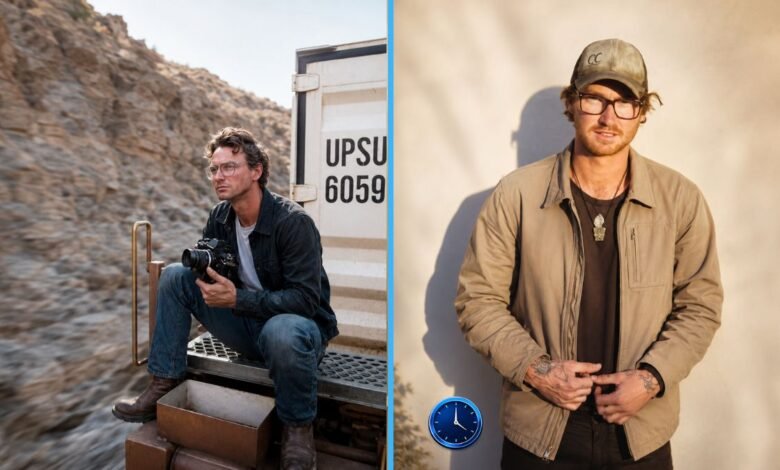
Introduction
Mike Brodie is an American photographer whose intimate pictures of young people travelling across the United States brought him international recognition while he was still in his twenties. Working for a time under the name the Polaroid Kidd, he photographed friends, drifters and fellow travellers from within their community rather than approaching them as a visiting journalist. Those experiences eventually formed the books A Period of Juvenile Prosperity and Tones of Dirt and Bone.
Brodie’s story did not follow the usual pattern of an artist building steadily towards greater fame. After his early work attracted galleries, publishers and museums, he trained as a diesel mechanic and largely withdrew from the professional photography world. His later book, Failing, and a 2026 solo exhibition at Casemore Gallery revealed that photography had remained part of his life, even when he was no longer presenting himself publicly as a career artist.
Quick Bio
| Field | Verified information |
|---|
| Professional Name | Mike Brodie |
| Name Used by Official Sources | Michael Brodie |
| Birth Year | 1985 |
| Originally From | Mesa, Arizona, United States |
| Profession | American photographer and trained diesel mechanic |
| Early Photography Name | The Polaroid Kidd |
| Known For | Intimate photographs of young rail travellers, drifters and life on the American road |
| Major Books | A Period of Juvenile Prosperity, Tones of Dirt and Bone and Failing |
| Museum Recognition | Several works are held by the San Francisco Museum of Modern Art |
| Latest Confirmed Development | Represented by Casemore Gallery and featured in a solo exhibition from 2 May to 20 June 2026 |
The table is based on Brodie’s official biography, his current gallery profile, his publisher and SFMOMA’s collection records.
Who Is Mike Brodie?
Mike Brodie was born in 1985 and is originally from Mesa, Arizona. His official biography says he began taking photographs in 2003 after discovering a Polaroid camera in a car. Photography was not initially presented as a carefully planned profession. It developed alongside his desire to travel, meet people and experience parts of American life that were far removed from conventional employment, education and domestic routines.
His early journeys included unauthorised freight-train travel, hitchhiking and long periods spent with transient communities. This form of travel was dangerous and often unlawful, but it gave Brodie sustained access to people whose lives were rarely represented from an insider’s perspective. He was not photographing strangers from a safe distance. He was sharing their routes, temporary sleeping places, friendships, uncertainty and physical discomfort.
That proximity became the defining quality of his photographs. The people in them do not appear to be performing for an outside news organisation. They are seen resting, travelling, waiting, caring for one another or enduring difficult conditions. Brodie’s position as a participant helped reduce the visible barrier between photographer and subject, although it also made the work intensely connected to his own youth and personal relationships.
The Polaroid Kidd and His First Photographs
Brodie became known online as the Polaroid Kidd while using an SX-70 camera and Polaroid Time-Zero film. His early colour photographs were made during the final period in which that film was readily available. The format’s softness, imperfect edges and distinctive colour response complemented the landscapes, worn clothing, railway environments and temporary living spaces he encountered.
Polaroid imposed practical limitations. Each photograph cost money, only a small number of frames could be carried, and the result could not be reviewed or corrected like a digital image. According to Brodie’s later interviews, this encouraged him to spend time with the people he photographed and wait until a moment felt worthwhile. The process helped him learn composition before moving towards faster 35mm photography.
When the relevant Polaroid film was discontinued, Brodie changed to a Nikon 35mm camera. That transition allowed him to photograph quicker and more unpredictable moments during travel. The quieter Polaroid portraits and the more active 35mm pictures would later be separated into different books, giving readers two related but visually distinct records of the same broad period.
Why A Period of Juvenile Prosperity Became Important
Published by Twin Palms in January 2013, A Period of Juvenile Prosperity brought together Brodie’s 35mm photographs of travel, friendship and youthful instability. The publisher describes the work as an archive of American travel photography formed during years of walking, hitchhiking and riding trains around the country.
The book’s importance lies partly in its refusal to separate freedom from hardship. Open landscapes and movement can appear exhilarating, but the photographs also show dirt, exhaustion, risk, damaged surroundings and limited security. Brodie did not present the railway community simply as an adventurous fantasy. Tenderness, boredom, physical danger and uncertainty coexist within the same visual account.
The publication was shortlisted for the Paris Photo–Aperture Foundation First PhotoBook Award. Twin Palms also records its inclusion in several prominent selections of the strongest photobooks of 2013, while Brodie’s current gallery says the book has reached a sixth printing. These achievements help explain why a relatively brief period of image-making continued to influence his reputation long after he had stepped back from exhibitions.
His photographs also moved beyond books and temporary gallery displays. SFMOMA’s online records list five Brodie works in its collection, including images numbered #4566, #5257, #3190, #5060 and #5999. Their inclusion offers more concrete evidence of institutional recognition than unsupported online descriptions of him as merely a cult or internet photographer.
Tones of Dirt and Bone Revisited the Polaroid Years
Tones of Dirt and Bone, published by Twin Palms in February 2015, returned to pictures made before the 35mm work in A Period of Juvenile Prosperity. Its 50 colour plates concentrated on the SX-70 photographs Brodie took between 2004 and 2006.
Because many of these photographs were made when Brodie and his subjects were stationary, they tend to feel more deliberate and contemplative. The book therefore functions as more than a collection of unused early material. It shows how Brodie’s visual language developed and how the technical restrictions of Polaroid photography affected the pace of his work.
The publication also complicated the chronology through which readers encountered him. His better-known 35mm book arrived first, while the earlier Polaroid photographs were published later. Understanding that sequence helps distinguish the order in which the images were created from the order in which the public saw them.
Why Mike Brodie Left the Art World
Despite the attention surrounding his photographs, Brodie did not immediately pursue a conventional full-time art career. He trained in diesel mechanics at a Nashville trade school and graduated in 2010. Contemporary interviews described him repairing engines and vehicles while expressing mixed feelings about the gallery environment that had grown around his youthful photographs.
It would be misleading, however, to say that he permanently abandoned photography. His later work shows that he continued carrying cameras through major changes in his adult life. What he rejected appears to have been the identity and professional expectations attached to being a celebrated young photographer, rather than the act of making pictures itself.
This distinction is central to understanding Brodie’s career. His absence from regular exhibitions was not evidence that the earlier pictures were accidental or insignificant. Instead, mechanics, employment, relationships, responsibility and continued travel became part of a second body of work that was slower to reach the public.
Failing and a More Personal American Story
Twin Palms published Failing in November 2024. The 412-page book contains 193 colour plates and covers a far longer, more adult period than Brodie’s early railway work. Its subject is not one clearly defined travelling subculture. It is a personal photographic diary shaped by work, attachment, upheaval, grief, roadside encounters and continued movement through the United States.
The shift is significant. A Period of Juvenile Prosperity viewed youth while its freedoms and risks were still unfolding. Failing considers what happens after that period, when choices acquire lasting consequences, and independence becomes entangled with responsibility. The later photographs include people, landscapes, animals and symbolic objects, creating a less linear and more introspective account.
A 2025 PhotoWork interview presented the book as Brodie’s return to photography on his own terms. That description is more accurate than saying he resumed an interrupted career. The later work emerged from years in which photography remained present but was no longer the only organising force in his life.
Mike Brodie’s Confirmed 2026 Gallery Return
The clearest current development is Brodie’s relationship with Casemore Gallery in San Francisco. The gallery now lists him among its represented artists and presented Mike Brodie: New and Selected Works from 2 May to 20 June 2026. The exhibition placed photographs from A Period of Juvenile Prosperity alongside work from Failing, allowing the youthful and adult chapters to be considered together.
This exhibition gave Brodie’s return a clearer institutional form. Rather than relying entirely on the reputation of images made nearly two decades earlier, it connected those recognised photographs with later work shaped by a different stage of life. The pairing also corrected the oversimplified online narrative that Brodie disappeared completely after becoming a mechanic.
His current position is therefore unusual but coherent. Mike Brodie is both the photographer of a specific American youth culture and an artist whose later work examines what followed that youth. The mechanical career, long public absence and personal nature of Failing are not side stories. They form the bridge between the two periods of his photography.
Final Perspective on Mike Brodie
Mike Brodie remains most widely recognised for the direct, warm-toned photographs he made while travelling among young rail riders, but his career cannot be reduced to the Polaroid Kidd name. His published work now traces a much longer movement from adolescent freedom to adult responsibility, loss and reflection.
The 2026 Casemore Gallery exhibition confirmed that Brodie’s early and later photographs are being considered as parts of one continuing record rather than unrelated projects. That continuity provides the clearest reason his work still attracts attention: he photographed communities from within, then allowed his own changing life to become part of the story.
More Celebrity Profiles: Pat Phillips: The Remarkable Story of John Bonham’s Wife and Family Legacy
FAQs
Who is Mike Brodie?
Mike Brodie is an American photographer originally from Mesa, Arizona. He became recognised for intimate photographs made while travelling around the United States with young rail riders and transient communities.
Why was Mike Brodie called the Polaroid Kid?
He used the name while making early portraits with an SX-70 Polaroid camera. Those photographs were later collected in Tones of Dirt and Bone.
What is Mike Brodie’s most famous book?
A Period of Juvenile Prosperity, published in 2013, is his most widely recognised book. It documents youthful travel, relationships and railway communities across the United States.
Did Mike Brodie stop taking photographs?
He withdrew from the professional art world and worked as a diesel mechanic, but Failing shows that he continued photographing during much of his adult life.
What is Mike Brodie’s book Failing about?
Failing is a personal photographic diary addressing adulthood, movement, work, grief, relationships and difficult experiences across the American landscape. Twin Palms published it in November 2024.
What is the latest confirmed update about Mike Brodie?
Casemore Gallery represents him and presented a solo exhibition of new and selected work in San Francisco from 2 May to 20 June 2026.